Extended report · 7 min
A park, a community plan and a Port dispute all moved on different clocks
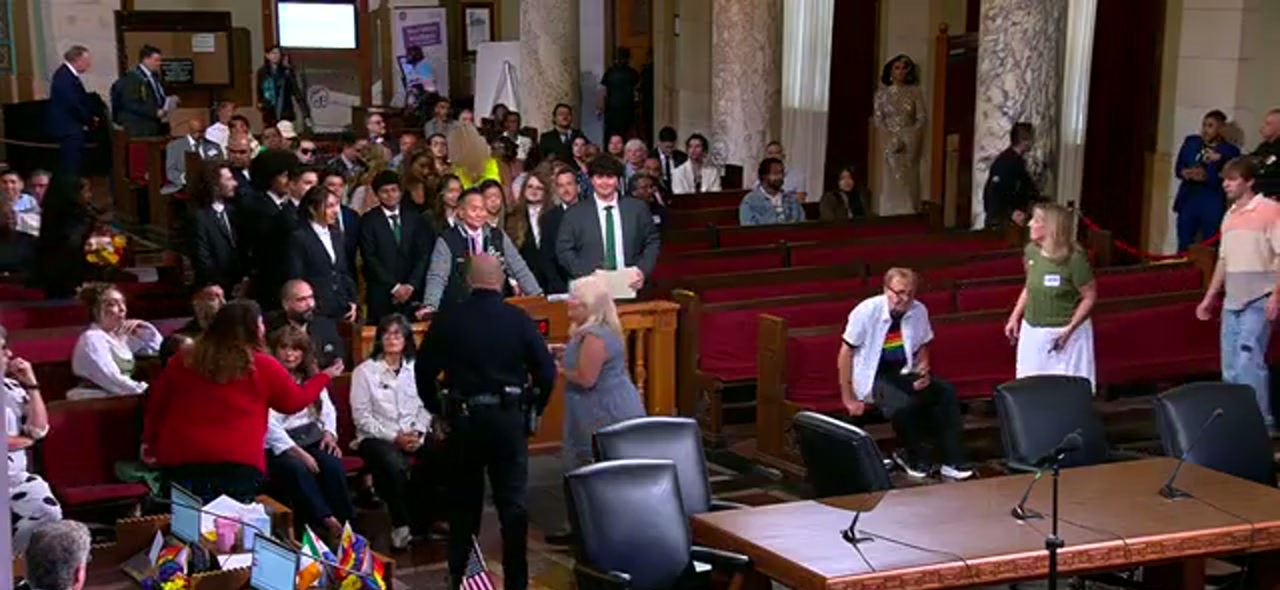
June 24 looked unanimous on the roll call board, but the votes did not all mean the same thing: one project can move, one neighborhood plan becomes policy, one Port decision comes back for review, and several continued items remain live.
The Council denied the El Corazon appeal; it did not approve a permanent use of the First-and-Broadway parkland. The current license ends in February 2027, and any longer-term plan would need a new action and CEQA review.
Most votes were unanimous, but the follow-through splits four ways
The day was less about close votes than about what kind of authority the Council was using. The El Corazon vote cleared an environmental appeal. The Boyle Heights vote adopted a land-use framework. The special meeting pulled a Port decision up for Council review. The settlement votes resolved litigation exposure in open session.
The appeal tested how much review a temporary downtown park needed
Item 1 centered on El Corazon Art Park, a temporary art park and gallery with an AltaMed-run component planned for dedicated city parkland at First and Broadway. SEIU Local 721, represented by Channel Law Group, challenged the project's Class 32 categorical exemption under CEQA and argued the city had skipped fuller review of what opponents saw as groundwork for a longer partnership on a prominent public parcel.
Councilmember Ysabel Jurado questioned Recreation and Parks environmental staff on the record. The staff response was that the project met the five requirements for the infill exemption, that none of the exceptions applied, and that the license agreement ends in February 2027. Jurado then moved to deny the appeal, and the Council agreed 11-0.
The park debate was really two arguments about public land
Supporters described a downtown site that could become a rare public gathering place, with cultural programming, family space and visible Latino arts near City Hall. Speakers tied the project to a broader shortage of welcoming civic space and said the appeal would delay a benefit residents had already waited for.
Opponents framed the same parcel as a process failure. The Downtown LA Residents Association and downtown neighborhood voices argued the city had not used a competitive RFP or full environmental review for one of downtown's most visible public sites. Several also pointed to a roughly 20-foot LED sponsor screen and questioned whether light and glare had been studied enough.
A temporary park and arts space would activate a long-stalled downtown site and give families a culturally rooted place to gather.
The site deserved more process and environmental review before the city moved ahead with a public-land partnership.
A 20-year planning process finally became a Council action
Item 12 adopted the Boyle Heights Community Plan Update. Jurado described the plan as a two-decade, resident-driven effort shaped by environmental justice, anti-displacement protections, affordable housing and a better separation between industrial and residential uses.
The vote matters because community plans are one of the city's main land-use tools. They shape how future development, zoning and neighborhood-serving policies are evaluated. The next test is implementation: whether the plan's environmental-justice and anti-displacement goals show up in project decisions, enforcement and future budget choices.
The special meeting pulled a harbor truck-parking decision back to Council
In the special meeting, the Council asserted jurisdiction over a Port Commission decision to amend the Port master plan and convert an 18-acre parcel near the 110 Freeway between San Pedro and Wilmington into truck-and-chassis parking.
McOsker stressed that the vote did not approve or reject the project. It used Council's review power to bring the decision up for consideration, with the matter expected to return quickly so he could continue talks with the developer and Wilmington residents who would absorb the added truck traffic.
Settlements and continuances filled out the agenda
The emergency response stayed on the record even without a vote
Several speakers returned to the East Side warehouse fire raised at the prior day's meeting. They described smoke, possible ammonia exposure, sore throats, dead fish in the LA River and frustration that residents still did not have enough information about what burned or what risk remained.
The city attorney noted that Jurado had introduced related motions the day before and that the mayor had declared a local emergency. That made June 24 a continuation of the accountability record rather than the decisive action day. The follow-up question is whether air-monitoring, testing results, cleanup responsibility and resident communication become public in a way people can use.
The next steps are procedural, but not minor
El Corazon Art Park can move under its temporary license, but February 2027 is the next major boundary. The Boyle Heights Community Plan Update now has to be measured against real land-use decisions. The Port truck-parking matter returns to Council for review. Items 16-18, Item 44 and the Boyle Heights fire response all remain active follow-up points for the next meetings.
Sources and method: This extended report uses the official meeting recording, agenda, special agenda, PrimeGov meeting record and Council files linked above. Timeline positions come from the official recording, and speaker details come from the human-verified ElevenLabs transcript saved with this meeting's source package.