3 min readTuesday, June 23, 2026·14 members voting
Published briefingOfficial record and source links included
The Council voted unanimously to restart the legal path toward phasing out oil drilling in Los Angeles, advanced a voter initiative for a half-cent sales tax dedicated to the Fire Department, and approved more than $36 million for emergency rental assistance. Outside the roll calls, the day belonged to tenants pleading for eviction-defense funding and Boyle Heights residents living under smoke from a warehouse fire.
ITEM 17Oil and gas drilling phaseoutAdvanced 14–0The Council adopted new environmental findings and asked the city attorney to prepare the ordinance needed to prohibit new oil and gas extraction and make existing extraction a nonconforming use citywide. This restarted the legal path toward re-adopting the phaseout; it did not make a new ban effective that day.
ITEM 36Half-cent sales tax for the Fire DepartmentAdvanced 14–0Members advanced a certified initiative petition that would ask voters to approve a half-cent sales tax for LAFD staffing, stations and equipment. The agenda identified the November 3, 2026 municipal election as the next regular election available.
ITEM 50Emergency rental assistance and income supportAdopted 13–0The Council approved a revised Measure A spending plan and a proposed $36.3 million increase to a housing-services contract for emergency rental assistance and income support. The money comes from LACAHSA funds, not the city's General Fund. Councilmember Curren Price recused himself because he is a landlord.
ITEM 49Tracking tenant complaints in Council District 14Adopted 13–0The Housing Department must report on Rent Stabilization Ordinance and Just Cause complaints in District 14: how long investigations take, why cases close, how repeat violations are handled and what prevents stronger enforcement. Price also recused himself from this vote.
ITEM 13City layoffs avoidedAdopted 14–0The Council instructed the Personnel Department to stop processing layoffs tied to positions eliminated in the 2025–26 budget. Tim McOsker said an earlier projection of roughly 1,600 layoffs had first been reduced to about 600, then to zero through funded vacancies and voluntary transfers.
OTHER ACTIONSEmergency declarations, street lighting and closed sessionMixed actionsItem 15, extending Council review of local emergency declarations from 30 to 60 days, passed on a divided vote. Street-lighting assessment hearings in Items 3–5 were continued to June 26. After closed session, Item 53 was referred to the PLUM Committee and the city attorney reported no action on Item 54.
The meeting opened with 10 members and a quorum; 14 members were voting by the main roll calls. Items 3–5 were continued, several matters were called special, and Items 8–12 and 16 passed before public comment.
Councilmember Ysabel Jurado described families in Boyle Heights and East Los Angeles living for nearly a week with smoke, ash and uncertainty after a warehouse fire. She said city offices and community organizations had distributed masks and air purifiers, checked on residents and translated emergency information.
Jurado said relief was not enough. Residents still needed to know what burned, what health risks remained and how oversight failed. She announced a package of motions focused on public health, transparency and accountability, arguing that Boyle Heights should not be left to carry another environmental burden alone.
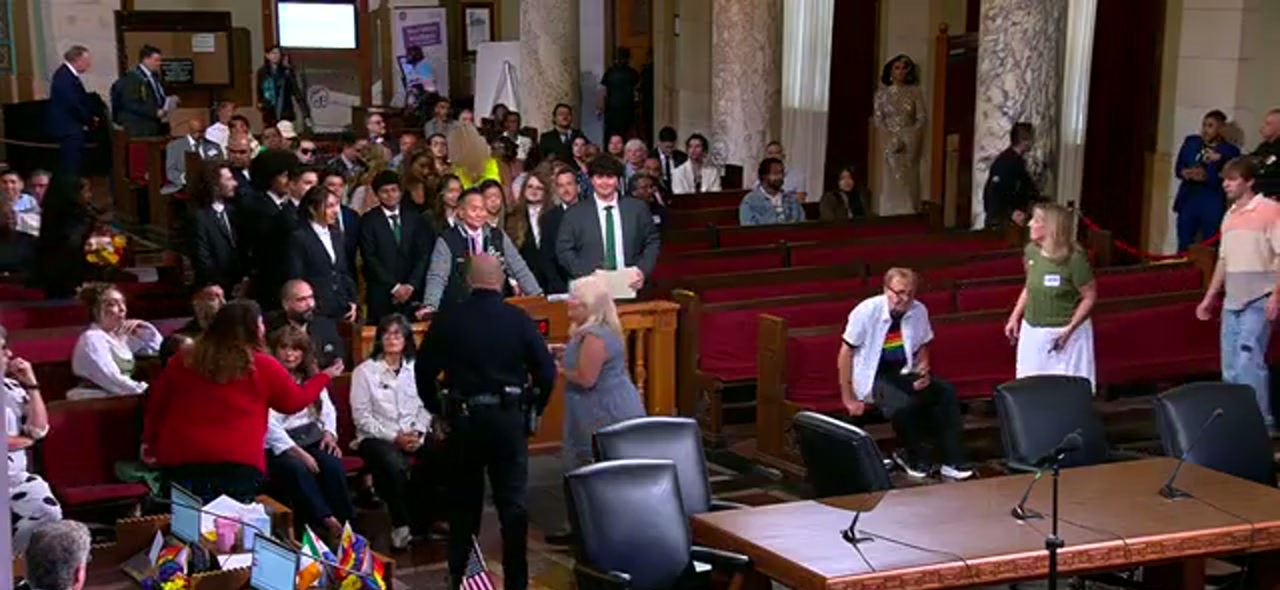
Public comment ran for about 87 minutes. The strongest organized testimony came from tenants and legal-service advocates urging the city to finalize four Stay Housed L.A. contracts and release eviction-defense funding.
Speakers described unlawful-detainer cases, disabilities, fixed incomes and the fear that losing legal help would put them on the street. Several credited the Eviction Defense Network, Legal Aid Foundation of Los Angeles and other Stay Housed partners with keeping them in their homes.
That campaign was related to the meeting's housing debate but legally distinct from Item 50. Item 50 allocated money for emergency rental assistance and income support; many speakers used that item and general public comment to press the separate dispute over eviction-defense contracts.
Environmental-justice advocates also supported Item 17, urging the Council to address active drilling sites and plug idle wells. Firefighters' union representatives backed Item 36, arguing that LAFD staffing has not kept pace with population, call volume or worsening fire risk.
The Council cleared most of the remaining agenda unanimously. It celebrated the elimination of planned layoffs, advanced the oil-drilling phaseout process 14–0 and approved the fire-funding initiative 14–0. Items 49 and 50 passed 13–0 with Price recused.
Members spent roughly two hours and 16 minutes in closed session. They returned with no reportable action on Item 54 and referred Item 53 to the Planning and Land Use Management Committee. The meeting adjourned shortly after 5:01 in the recording.
What Happens Next
The city attorney must return with the oil-and-gas ordinance before the phaseout can be formally re-adopted. The fire-funding initiative moves through the remaining election process for voters. The Housing Department must carry out the approved rental-assistance plan and prepare the District 14 enforcement report. Meanwhile, the Stay Housed L.A. contract dispute remains a separate pressure point after dominating the room.
Sources:▶ Watch full recording ·
Official agenda ·
PrimeGov meeting record ·
Council File 17-0447-S2.
Timeline markers are positions in the official recording. This briefing relies on the meeting's auto-generated captions, which contain four internal gaps. Public-speaker names have not been assigned, so no public commenter is identified by name or presented in a quote card.
✓ Three-minute briefing complete
Go deeper on the decisions
The extended report separates what the Council actually approved from what still requires another ordinance, election step, contract decision or follow-up report.
Continue · 7 min ↓Extended report open ↑
Extended report · 7 min
Four decisions—and four different kinds of follow-through
The oil phaseout, Fire Department tax initiative, rental assistance and tenant-enforcement review all advanced. None of them means the same thing happens next.
The key distinction
June 23 restarted the legal route toward an oil-drilling ban; it did not put the ban back into effect that day. The city attorney must first return with an ordinance for another Council action.
The short version
The headline votes moved on different tracks
14–0Oil phaseout advanced
14–0Fire tax advanced
$36.3mContract increase proposed
The unanimous counts can make the meeting look routine. The consequences are not. One vote asks lawyers to write an ordinance, another advances a voter initiative, and the housing action directs public money through a regional funding plan and service contract.
1 · Oil and gas
Why the phaseout needed to be restarted
Item 17 adopted new environmental findings and instructed the city attorney to prepare the ordinance needed to prohibit new oil and gas extraction and classify existing extraction as a nonconforming use. That language matters because the vote was a legal and procedural restart, not a same-day shutdown order.
Environmental-justice advocates supported the action during public comment, pointing not only to future drilling but also to active sites and idle wells that still need attention. The next decisive document is the ordinance the city attorney returns. Until the Council considers and adopts it, the phaseout remains a policy on its way back through the legal process.
What to watch
The ordinance’s treatment of existing sites, implementation schedule and enforcement mechanism—and whether any new legal challenge changes the timetable.
2 · Fire Department funding
A Council vote advanced the tax; voters decide it
Item 36 concerned a certified initiative petition for a half-cent sales tax dedicated to Fire Department staffing, stations and equipment. The Council’s 14–0 action moved the initiative through the municipal election process. It did not begin collecting the tax.
Firefighters’ representatives argued that staffing and equipment have not kept pace with population, call volume and fire risk. The question for the election stage is broader: whether voters will accept a citywide sales-tax increase and whether the final ballot materials make the spending controls and promised service improvements clear.
3 · Housing money
Rental assistance passed, but it was not the contract dispute speakers came to resolve
Item 50 approved a revised Measure A spending plan and a proposed $36.3 million increase to a housing-services contract for emergency rental assistance and income support. The money comes from LACAHSA funds rather than the city’s General Fund. The item passed 13–0 after Councilmember Curren Price recused himself because he is a landlord.
Public comment repeatedly linked the day’s housing agenda to another unresolved matter: four Stay Housed L.A. contracts for eviction-defense services. Speakers described pending eviction cases, disability, fixed incomes and the practical value of having legal representation. Their testimony gave the meeting its emotional center, but approving Item 50 did not itself finalize those legal-services contracts.
What Item 50 funded
Emergency rental assistance and income support through the revised Measure A plan and housing-services contract.
What remained unresolved
The separate Stay Housed L.A. eviction-defense contracts that tenants and legal-service advocates asked the city to release.
4 · Tenant enforcement
District 14 gets a closer look at how complaints disappear
Item 49 requires the Housing Department to report on Rent Stabilization Ordinance and Just Cause complaints in Council District 14. The requested review covers investigation times, reasons cases are closed, treatment of repeat violations and barriers to stronger enforcement.
A report is not an enforcement action, but it can make the system measurable. The useful follow-up will show how many complaints end without a remedy, how long tenants wait and whether repeat cases are visible across properties and owners. Price also recused himself from this 13–0 vote.
5 · Boyle Heights
The warehouse fire exposed an information gap
Councilmember Ysabel Jurado described residents living with smoke, ash and uncertainty after a Boyle Heights warehouse fire. City offices and community organizations distributed masks and air purifiers, checked on residents and translated emergency information, but immediate relief did not answer the central questions: what burned, what exposure remained and how oversight failed.
The motions Jurado announced were framed around public health, transparency and accountability. The next briefing should track whether agencies publish testing results, identify the materials involved and explain who is responsible for cleanup and longer-term monitoring.
6 · The rest of the record
Layoffs stopped; two closed-session matters ended differently
Item 13Stopped processing layoffs tied to positions eliminated in the 2025–26 budgetAdopted 14–0
Item 15Extended Council review of local emergency declarations from 30 to 60 daysAdopted
Items 3–5Street-lighting assessment hearingsContinued to Jun 26
Item 53Returned from closed session and referred to the PLUM CommitteeReferred
Item 54City attorney reported no action after closed sessionNo action
7 · What happens next
The follow-up belongs in four different places
Watch for the city attorney’s oil-and-gas ordinance; the remaining election steps and ballot materials for the Fire Department initiative; implementation of the rental-assistance plan; and the Housing Department’s District 14 complaint report. Separately, the Stay Housed L.A. contracts and the Boyle Heights fire response remain live accountability questions even though neither was resolved by the headline roll calls.
Sources and method: This extended report uses the official meeting recording, agenda and PrimeGov meeting record linked above, plus the Council file for the oil-and-gas action. Timeline positions come from the official recording. Because the automatic captions contain gaps and public-speaker identities have not been verified, the report paraphrases their testimony without naming or quoting individual speakers.